REGIONAL PRIORITY PLANNING
Working together to reduce wildfire risk for our Communities
The San Luis Obispo County Regional Priority Plan (RPP) is a collaborative wildfire resilience initiative led by the San Luis Obispo County Fire Safe Council in partnership with local agencies, community stakeholders, the California Department of Conservation, and the California State Coastal Conservancy. The program integrates regional wildfire assessments, planning documents, GIS analysis, and project prioritization tools to support coordinated wildfire resilience efforts for all lands and jurisdictions of San Luis Obispo County.
The RPP is organized around three core planning elements:
GEOGRAPHY & GOVERNANCE
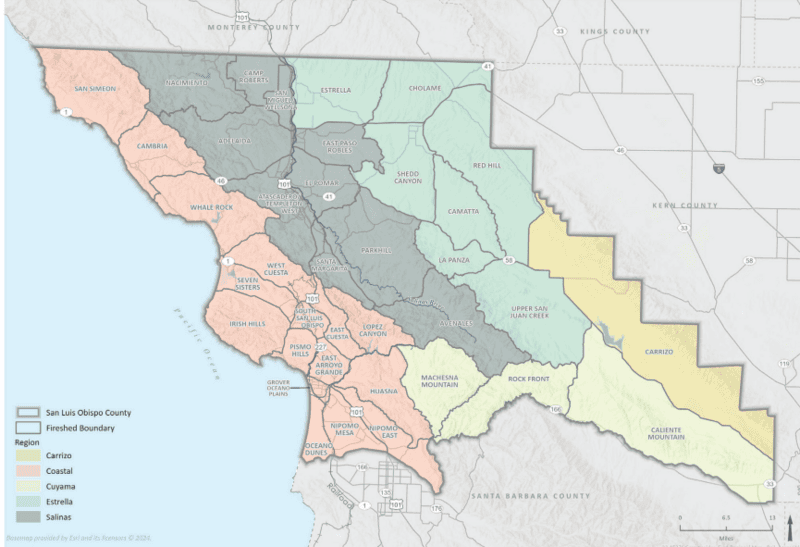
The San Luis Obispo County Fire Safe Council (SLOFSC) serves as the governing and coordinating organization for the Regional Priority Planning (RPP) process throughout all lands and jurisdictions in San Luis Obispo County.
The SLOFSC Board of Directors includes 34 voting members and 12 non voting ex officio members representing local municipalities, special districts, county, state, and federal agencies, tribal organizations, non governmental organizations (NGOs), community fire safe focus groups, and public stakeholders with a shared interest in wildfire resilience and Wildland Urban Interface (WUI) planning.
The SLOFSC provides countywide coordination through a collaborative governance structure that integrates local agencies, partner organizations, community stakeholders, and grassroots Fire Safe Focus Groups. Currently, 13 community level Fire Safe Focus Groups help connect local residents, organizations, neighborhoods, and jurisdictions directly into the regional planning and project development process.
SLOFSC Meetings are open to the public and provide opportunities for community participation, project discussion, and regional coordination. Community members and organizations can participate by attending public meetings, joining local Fire Safe Focus Groups, contributing to project development discussions, and participating in regional wildfire resilience planning efforts. Meeting schedules, participation opportunities, and additional information are publicly available through the SLOFSC Meetings page.
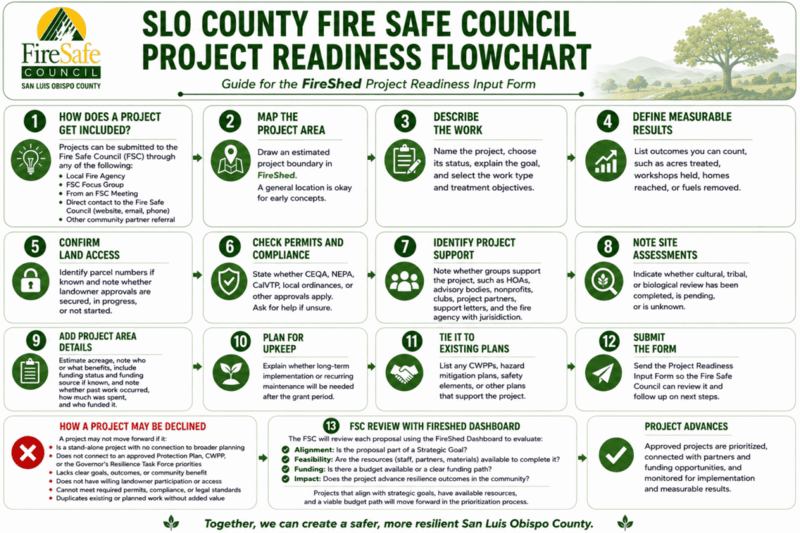
As part of the Regional Priority Planning framework, the SLOFSC is responsible for developing and managing the FireShed Regional Priority Planning platform, including the FireShed Dashboard, Project Portal, and our regional project portfolio. The SLOFSC solicits, reviews, and coordinates project proposals submitted by both member and non member organizations or residents throughout the county.
Project evaluation and prioritization are conducted through a collaborative review process by our Project Review Team. Proposed projects are evaluated using local wildfire risk assessments, mitigation strategies, land use considerations, Community Wildfire Protection Plan (CWPP) priorities, and regional resilience objectives to help ensure projects align with countywide wildfire preparedness and long term resilience goals.

ASSESSMENT & METHODOLOGY
The San Luis Obispo County Fire Safe Council uses FireShed assessments, wildfire science, and community input to prioritize projects based on risk reduction, community benefit, readiness, funding, and alignment with regional plans.
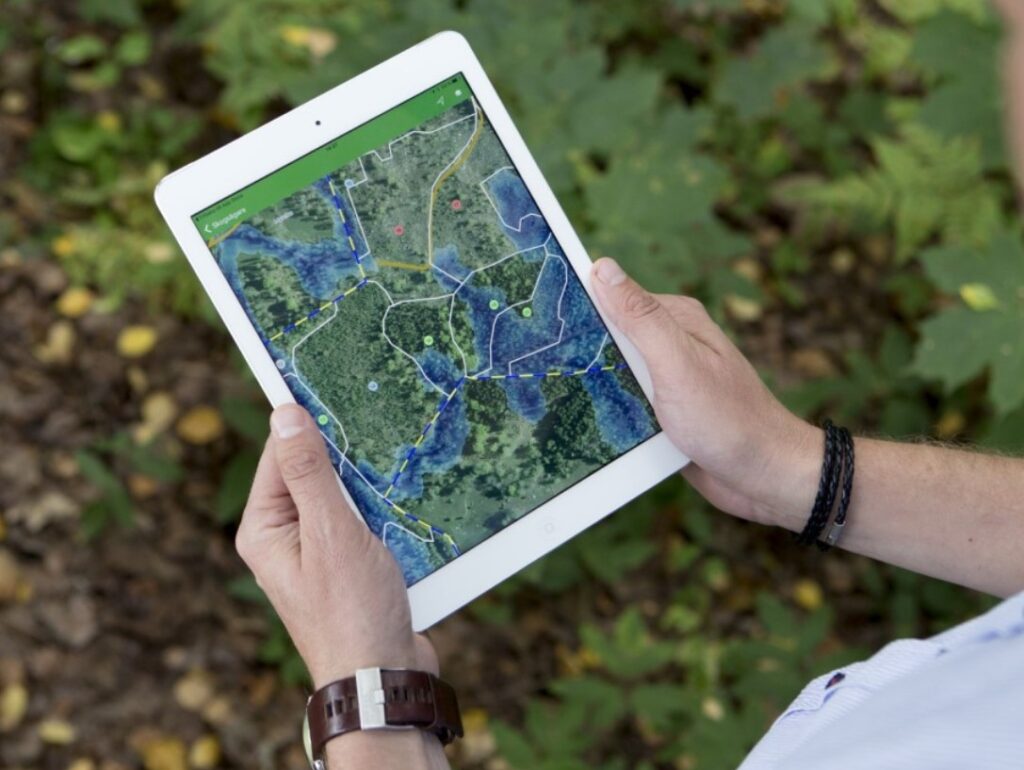
The San Luis Obispo County Fire Safe Council (SLOFSC) utilizes The FireShed Report and FireShed Dashboard serve as the regional landscape assessment for the Regional Priority Planning process and provide the foundation for project prioritization throughout all lands San Luis Obispo County a regional assessment and methodology framework that combines wildfire science, GIS analysis, planning documents, local data, and community input to identify wildfire risks and prioritize resilience projects throughout San Luis Obispo County. Through the FireShed Report and FireShed Dashboard, we assess wildfire hazards, fuel conditions, community vulnerability, evacuation considerations, ecological resources, and infrastructure risks across the county.
Our approach balances fire risk reduction, ecosystem health, cultural values, and community safety to support long term regional resilience. Project evaluation also considers local Fire Jurisdiction support, funding opportunities, project readiness, staffing and operational resources, and the long term ability to implement and maintain projects successfully.
Projects that support the goals and objectives identified in Community Wildfire Protection Plans (CWPPs), FireShed planning efforts, evacuation planning initiatives, and other resilience strategies are considered especially important within the Regional Priority Planning process. However, we also recognize the value of stand alone projects that improve wildfire preparedness, reduce risk, or enhance local community resilience.
LANDSCAPE PROJECT PORTFOLIO
The San Luis Obispo County Fire Safe Council maintains and updates the FireShed Portfolio to coordinate and track resilience projects, including fuel reduction, outreach, ecological restoration, and evacuation improvements. These efforts support wildfire and community protection plans, reduce risk, protect infrastructure, and may include partner-led projects as information becomes available.
The San Luis Obispo County Fire Safe Council (SLOFSC) maintains the SLO County FireShed Portfolio as part of the Regional Priority Planning (RPP) process to help identify, coordinate, and track wildfire resilience projects throughout San Luis Obispo County. The portfolio represents the Landscape Portfolio of Projects component of the RPP framework and includes current, funded, and awarded projects across multiple jurisdictions and communities countywide.
Projects within the portfolio include planning efforts, community outreach, fuel reduction, ecological restoration, evacuation improvements, defensible space initiatives, and other wildfire resilience activities. These projects demonstrate how residents, SLOFSC focus groups, local fire agencies, nonprofits, SLO County cities, districts, community organizations, public agencies, and regional partners are working together to reduce wildfire risk, protect critical infrastructure, and strengthen long term community resilience.
The SLOFSC regularly updates the project portfolio featured on this website. Projects highlighted within the portfolio directly support and help implement the goals, objectives, and priorities identified in the FireShed Regional Priority Plan, Community Wildfire Protection Plans (CWPPs), evacuation planning efforts, and other regional resilience strategies.
Projects managed by partner organizations may also be included as information becomes available to help provide a more comprehensive view of wildfire mitigation, preparedness, and resilience activities occurring throughout San Luis Obispo County.
Project Portfolio Map is an interactive map of wildfire resilience projects across San Luis Obispo County, highlighting locations, funding, timelines, and treatment types that help protect communities and infrastructure.
PROJECT REVIEW TEAM
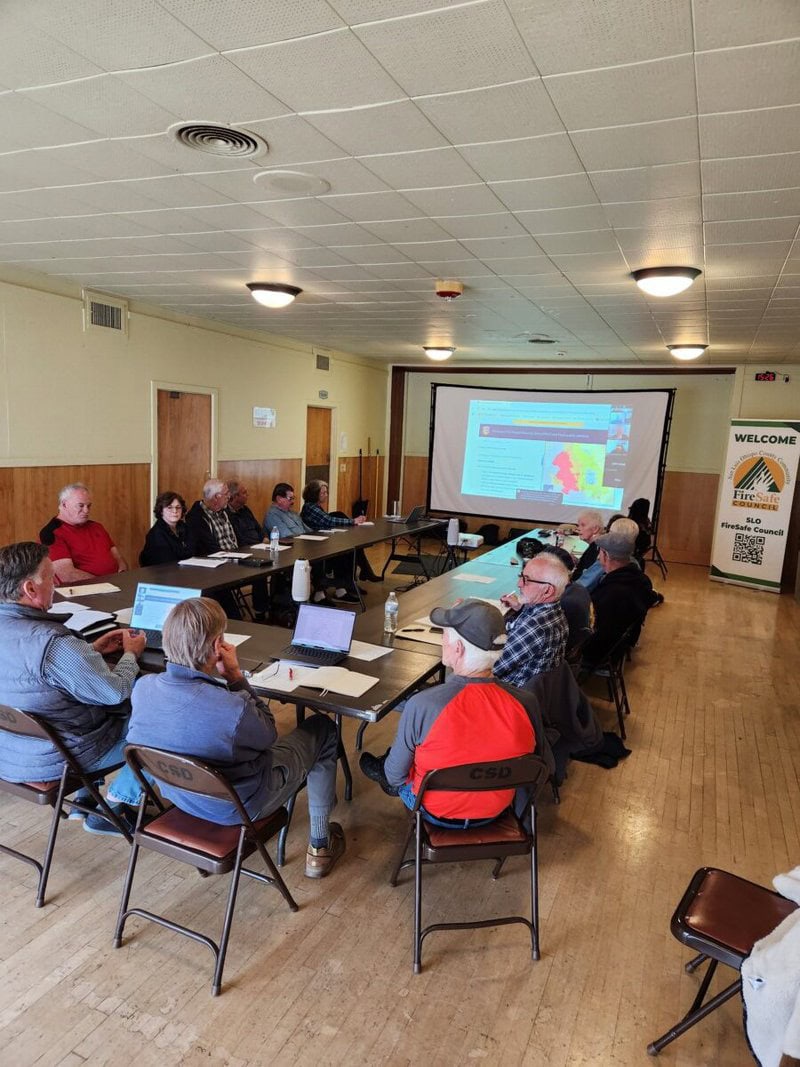
To evaluate proposed projects the SLO FSC project review team, comprised of subject matter experts, practitioners, and community members, using a transparent and science-based prioritization methodology that incorporates data-driven approaches for determining, project readiness, strategic connection to community plans and priorities, funding sources, environmental and cultural conditions, implementation resource availability, and project management capability.
GUIDANCE & PLANNING DOCUMENTS
The San Luis Obispo County Fire Safe Council prioritizes projects identified in the following plans that directly advance their goals and objectives. These documents guide wildfire and forest resilience efforts throughout San Luis Obispo County, helping partners focus investments on projects that reduce wildfire risk, protect communities and critical infrastructure, and conserve natural resources.
Working with public agencies, tribal partners, local fire agencies, nonprofits, and community organizations, the Council coordinates project development, funding opportunities, and implementation. Projects are evaluated for consistency with these plans, community benefit, feasibility, readiness, and long-term maintenance needs. This collaborative approach helps reduce duplication, strengthen funding applications, and direct resources toward shared priorities.
These plans are living documents that evolve with new data, changing conditions, and community input. Through broad participation and transparent decision-making, the Council and its partners combine local knowledge with technical analysis to keep projects relevant, achievable, and responsive to community needs while advancing the plans’ long-term resilience objectives.
FINANCIAL SPONSORS